[entries may contain NSFW text]

As of 2026, I'd like to start keeping track of the things I watch, read, play, etc. This page serves as the repository, and will likely feature many returns to media I've already seen since I'd like these all to be my fresh thoughts (a good excuse to revisit many things), rather than recollections on what I may have thought at the time. I will likely still mention my younger self's impressions of a piece of media regardless, if applicable.
These are not reviews! Just my general thoughts after a bit of time to think. Reviews involve much more work, so if I write any of those I'd like them to be separate from this page... I also might get some technical information wrong since I'm only one guy. Feel free to correct me on my guestbook or something lol.

Also, there may be spoilers, though I will try to avoid spoiling anything in gruesome detail (and if I get more specific, I will add a warning and/or block it out so you have to hover to read). I will suggest that if you'd like to get into anything listed here, avoid reading my thoughts until later.
MANGA
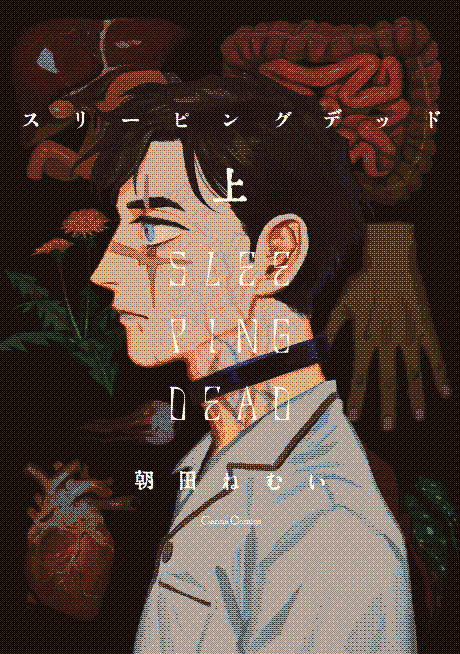
- Asada Nemui
- Released: 2020
- First Read: 2026
Sleeping Dead
— スリーピングデッド
[18+]
The first manga I've read from Asada Nemui. A beautiful, sad, atypical BL story that's just within the threshold of tragedy where I feel I can reread it without bringing too much pain onto my conscience.
I'm not often interested in tragic stories in this vein, but I enjoy atypical, subversive BL/yaoi, and everyone I know has suggested this author and this manga specifically, so I gave it a shot.
This is, for the most part, essentially a slice-of-life story centering around a murdered high school teacher and the sociopathic scientist who revives him and now keeps him alive by feeding him human flesh, featuring their moral conflicts chiefly pertaining to the topic of the sanctity of human life. Despite the immediately doomed forecast presented, it still manages to make me laugh at some points or even feel the smallest amount of hope for their situation, but alas...
Mamiya is the sort of character who you immediately flag as developing empathy or romantic feelings for Sada later on (it's still BL, after all), but it doesn't make the culmination of his feelings for Sada any less tragic. The final chapter was very painful, I think the author really nails the sense of hopelessness particularly through her skillful choice of paneling style for the final scene; having developed a genuine attachment to somebody and then being suddenly left all alone with nothing left, the way she depicts the progressive deterioration of Mamiya's mental state... It's just good, sad stuff.
Sada is just a horribly sad character and I mean that in the best way, as a compliment lol. His life was cut short in such a pathetic way and for the entire runtime of the story, he's doomed to such a miserable existence. You see him reminisce on his past love life, his friends, everything he was forced away from and then forced to remember after being denied at least some peace in his death after being revived. He wrestles with the vagueness of his new identity for the entire duration, only seeming to find some amount of peace towards the end, but by then it's of course too late. It sucks to see! And that's a good thing!
One of my major problems with reading short BL stories is that I often have trouble feeling any investment in the relationship during such a short amount of time. Writing believable, interesting chemistry in a short timeframe is very hard to pull off, but Sleeping Dead made it work for me. Which, again, only serves to make the ending sadder, and this is something it absolutely needed to do to achieve its ultimate emotional payoff, so for that I would rate it very highly (if I gave ratings). I sincerely felt Mamiya's love for Sada after everything they go through together, and vice versa. I felt the pain as well.
Also, on a sillier note, I think this is the first time in my life where I've read a yaoi where the uke 1. is so asexual 2. is never fucked by the seme, and 3. fingers the seme. Actually wild that she was able to pull that off and I respect the power of Asada Nemui after witnessing it...
ANIME
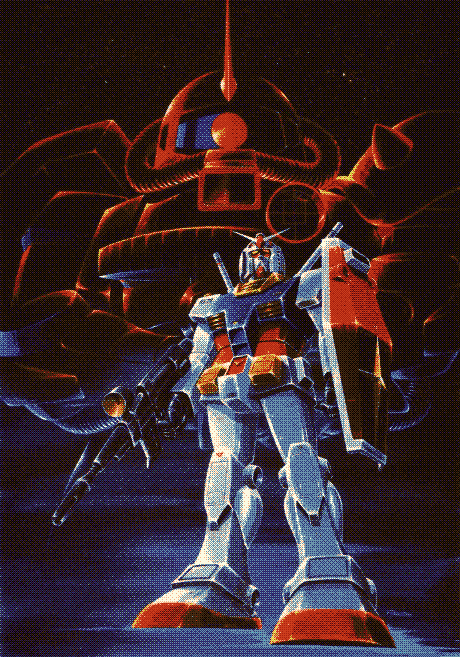
- Yoshiyuki Tomino, Sunrise
- Aired: 1979-1980
- First Watched: 2025
Mobile Suit Gundam
— 機動戦士ガンダム
My wife is a huge Gundam fan, and has wanted to show me the series for a very long time. In late 2025 we decided to finally start our chronological Gundam marathon, starting with the very original.
Prior to this, my only experience with Gundam was via cultural osmosis, having seen some Wing & SEED on Toonami as a kid, and watching a bit of IBO more recently. It's safe to say I'm very fresh to this series.
I love watching old anime! Gundam 79 definitely shows its age, but as a piece of history I've found it very interesting. It also has a lot of retro anime goofiness that I've found very entertaining, even if it's clunky from a more objective standpoint. I had a great time watching this anime.
On a first watch—as is pretty common with war-focused anime, especially if it's older—it was a bit hard to follow some of the series of events specifically with regard to the war aspect. I decided that it'd probably benefit me to read more episode summaries with future installments (hopefully I actually remember to...).
According to the Wikipedia page, the director of Gundam was inspired by Japanese aggression in Manchuria in 1939 and this was something he specifically wanted to allegorically depict (as this was part of WWII, Gundam also is inspired by WWII as a whole by virtue of this and some later details).
The story focuses on a group of primarily-teenaged characters forced into essentially becoming child soldiers after their home colony is destroyed during a skirmish between the Earth Federation and Zeon. The main cast end up allied with the Earth Federation as they must pilot the Federation's warship "White Base" through the galaxy, all-the-while pursued by Zeon and the famous blond gay guy from Gundam: Char Aznable.
The series, though you may assume otherwise due to its age and its status as a cool action anime if you're completely unfamiliar with Gundam, is not shy about depicting military officials on every end as pieces of shit and is very up-front with its depiction of war and all things related as dirty and miserable, even with cool giant robots (this is something Gundam would pioneer in the mech genre, as far as i understand it).
Zeon is a sort-of allegory for Nazi Germany even down to their uniforms (though lacking much of the worst aspects), with some of their officials even naming Hitler specifically as an idealistic figure. The Earth Federation is routinely shown treating the main cast like garbage. Amuro's (the protagonist) PTSD is at the forefront of the story very often, and he's far from the only character shown to suffer from it while still being forced back into scenarios that would set it off regardless.
I found the scenes where Amuro reunites with his father especially interesting, poignant and personally, my favorite part of the anime. For the time this anime aired (plus for an anime that I assume was aimed at younger boys), I feel it was likely very unusual to show a father who urges his son to fight as some deadbeat who you're meant to find pitiable and completely uncaring towards Amuro, who reacts very emotionally to the realization that his father sees him as simply an extension of his Gundam experiment rather than his son, showing no care for him even after they'd been separated for so long.
Along with other scenes depicting development of PTSD and other trauma responses to war, it's easy to see how this ended up pioneering a new genre despite apparently not being popular at the time. There were several points where I noticed the animators' attempts at visually depicting more of the brutal aspect of warfare, but tech and budget limited them from achieving the same horrifying effect that later Gundam entries would go on to refine; I appreciate the efforts here nonetheless.
Other aspects of Gundam 79 are much clunkier. Any attempts at depicting romance are laughably shallow (literally; i found these moments very funny), characters sometimes make dumb decisions beyond the "they're just dumb kids in wartime" justification, and for some reason they insist on keeping the three annoying little kid characters around the entire time as I guess... comic relief? I didn't laugh so I'm not sure. Their scenes and general existence in the story are grating and useless; they shouldn't have been shown more than maybe once. I found the episode where they had the option to leave them behind at a safe children's care center (a plainly logical decision, considering they are small children who risked being blown up by Char daily as long as they stayed on the White Base and they constantly got in the way of important military operations) but ultimately didn't especially weird with its messaging.
The implementation of "Newtypes" (a human with some form of psychic powers, though they're denied to be "psychics" exactly later on; it's complicated) was also rather clunky and felt like a bit of an afterthought. Wikipedia mentions its implementation into the anime as a means of explaining why Amuro could pilot the Gundam at such a young age, so I think my theory makes sense. I've been told that Newtypes are written into future Gundams with more smoothness, but it definitely felt a bit phoned in in this one.
Overall though, I had a lot of fun watching this and I would watch it again, even if a decent amount of my enjoyment came from some of the aged jank. Old animation has always fascinated me; especially landmark, culturally defining pieces of animation like Gundam. I'm happy that I finally watched it. I feel like this likely won't end up being my favorite Gundam anime, but it gets my respect for what it started and a smile for being a fun watch.
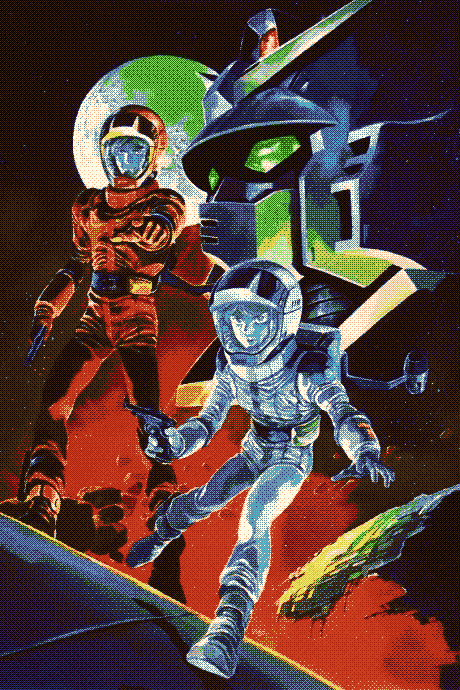
- Yoshiyuki Tomino, Sunrise
- Aired: 1985-1986
- First Watched: 2026
Mobile Suit Zeta Gundam
— 機動戦士Ζガンダム
Oh boy... I was excited to watch Zeta and see the direction they decided to go in after the original Gundam anime, but unfortunately it ended up really disappointing me.
To start with positives, the animation and visual quality is often very beautiful when compared to the original. Apparently, they allocated a LOT to the budget for Zeta, and it shows especially in the earlier episodes. Seeing all of the new animation tech they had five years later was very fun and interesting, I think they did a great job for the most part.
Kamille is a cute character and a decent selection of episodes are interesting, when you actually know what's going on, but...
Sadly, I don't think this is a good anime nor is it one I would ever rewatch in full unlike the original Gundam, so as it stands I like Zeta less among the two I've seen so far.
The plot is just confusing and honestly illogical, I found it very difficult to understand what was even going on at several points. Characters just appear and things just happen sometimes seemingly at the whims of the writers, I guess. You can get the main big story beats, but any finer details were just garbled. I found the middle of Zeta to drag on confusedly at a few points as well, like it didn't really know where it wanted to go for a while.
For an example of "things just happen to happen", a character with a very minor appearance that seemingly died early on randomly appears out of nowhere later and is given full clearance by the story against all reason to infiltrate the AEUG and have an epic betrayal moment despite it making no sense for the other characters to have allowed any of it to happen. It only happens because the story needed it to. This happens on several occasions.
The tone is all over the place and, frankly, I think Gundam 79 was much better at depicting and understanding the grim reality of war, as well as setting the tone when it needed to be serious compared to Zeta. Episode 41 I found especially egregious in this regard.
On one hand, 41 is meant to be so-far the most grim episode as it shows the Titans gassing an entire colony of thousands of people to death, Kamille experiences intense psychic pain as he feels each person die... but then half the episode is also dedicated to the stupid antics of the two obligatory annoying child characters (yes, they did it again LOL) and this new character who's shown to be an at-the-moment dumb-as-rocks brocon as she has to go to the doctor, and she has her tits out, and you're meant to laugh. Then later she cradles a child's corpse. The whiplash was ridiculous lol
During the show's final battle, I feel it finally understood that it needed to take the situation seriously (the very beginning of Zeta was fine in this regard as well, when Kamille's mother is kidnapped and dies), but by that point I was just checked out for the most part. The imapact of everything Kamille had been going through just didn't land because it lacked the proper setup beforehand to make the payoff work.
The ending also honestly felt weirdly cramped and rushed to me, even though they had 50 episodes to reach this point. Too much real estate was wasted on... I guess some of the worst attempts at writing relationship drama that I've ever seen in an anime, frankly LOL
The addition of even more annoying children onto the Argama despite the fact that this is an active war situation is still completely stupid, annoying, and not funny. Again, I feel like it's an attempt at comic relief but their presence just makes every other character look dumb by proximity for allowing these children to live on the ship, distract pilots, attempt to STEAL A MOBILE SUIT... I'm supposed to take this seriously, apparently, but the show can't even decide if it takes itself seriously.
This time it's even worse than 79's child characters because at least in 79, the entire crew is made up of traumatized teenagers, so of course they could make this dumb mistake of letting problematic children live on the war ship they've taken refuge in. In Zeta, the Argama has dozens of adults who are war-seasoned, there is absolutely NO excuse for them to be keeping these kids around other than I guess they're just that fucking stupid. Not a very good thing to have if you want me to see these characters as competent, it seems minor but this really just takes me out of the reality of the situation so much.
The greatest sin of Zeta, though, is the way it CONSTANTLY shoehorns in awful romance subplots, and the way it writes its female characters.
I understand that this is an anime from the 1980s, but every single prominent female character sans Haman is written into having a stupid instant romance subplot with a male character that is honestly so devoid of chemistry it makes you laugh out loud to see them attempt to make it into something of any worth in the story. They especially thought they were cooking with Katz and Sarah, I was just astounded by how audacious it was more than anything...
Fa also is, for some reason, relegated to being le child caretaker despite there being actual capable adults on the ship who can take care of these dumb kids (or better yet, adults who can get them off the ship and somewhere safe) because they want to show you how epic motherly she is. Embarrassing.
Women are introduced and immediately fall in love with a man, and the man they fall in love with will immediately become stupider and make some fuckup so major because Zeta really suffers from "cuz-the-plot-needs-it-itis". So much air time is dedicated to these pointless romance subplots to the point where it's annoying and the main reason I just couldn't rewatch this anime. At some points, this sort of thing seriously happens like every episode and sometimes with more than two "couples", it's incredibly egregious and the writers practiced zero restraint here.
I felt like it might have been the worst attempt of all time to attract more female viewership, but it was all SO ASSSSS... I don't know how anyone could enjoy this aspect of this show even a little bit.
At the end, I feel bad considering this is an important Gundam entry and one that's very popular with long-time Gundam fans (in my POV), but the struggle to follow the disjointed storyline combined with the very, very excessive, laughable attempts at writing relationship drama, and an inability to properly portray the seriousness of the situation is probably going to land this one low on my list of favorite Gundam entries in the long run.
At least Char was fun, with a beautiful horse mane and cunty little poses... I would have enjoyed it a lot more if more focus was given to his relationship with Kamille. I was thinking there would be much more focus on this than there ultimately ended up being, but I digress. I also would have liked Amuro to be more prominent, but they absolutely fucked him over here in favor of worse new characters (his obligatory "love interest" was so unlikable and also terrible to him, I'd literally be jeering at the screen for her to leave him alone whenever she showed up... OTL)
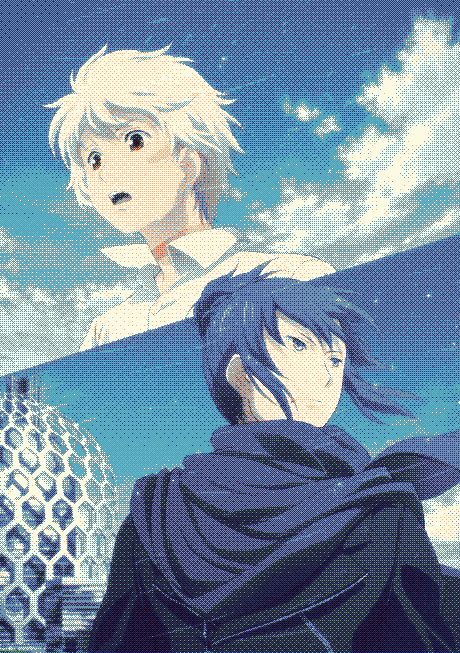
- Asano Atsuko, bones
- Aired: 2011
- First Watched: 2025
No.6
As one of my friends has described it, "a gateway drug to BL", and I'm inclined to agree. lol
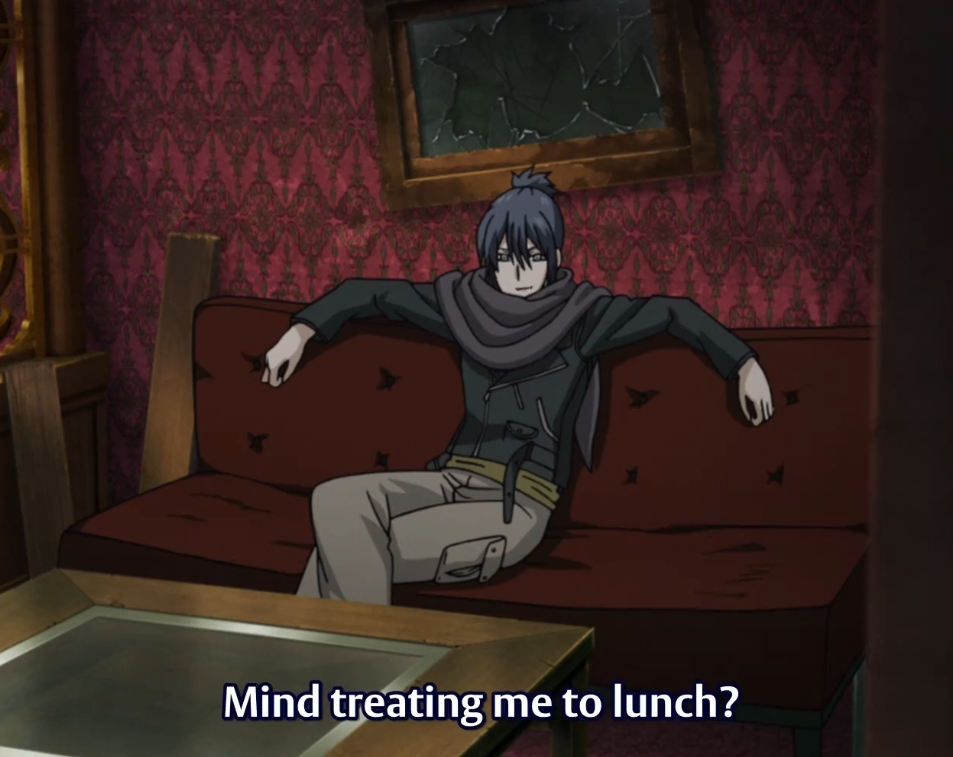
It's a short anime with some interesting worldbuilding and a likable primary relationship. However, some dialogue is a bit stiff, there are points of noticeable stagnation in the story, and it frankly had a very weak, rushed ending that left me feeling dissatisfied. Like "is that really it?" was my initial response. I am fond of it though, but it's regretably not very strong on the overall narrative aspect. I think the way I would summarize most of my issues with No.6 2011 is just "wasted potential, not enough time".
It got me interested enough to make me want to read the original light novels it's sourced from, though, as well as the apparent sequel to the main story (the anime ends on a big cliffhanger...). I do wonder if it'll remedy some of my issues with the anime.
Apparently, this adaptation is trying to take nine whole light novels and condense them down into eleven 23min episodes, so its certain that's causing many problems primarily with the pacing and such. I will definitely be reading these and coming back here to leave my continued thoughts.
The setting itself is interesting enough, consisting of your dual "utopian" authoritarian state that punishes wrongthink/etc + the outside slums of those who were banished or escaped. It isn't doing anything too crazy with this formula that's not too uncommon in sci-fi, but I think it suffices. I think it's gauche to criticize anything in that sort of "Simpsons did it" cliche manner, so I'll just leave it at "it serves its purpose fine".
Nezumi and Shion have an interesting dynamic and setup so it's easy for me to see how it captured the 2010s fujo teen mind (this anime was very big on Tumblr when it aired, while I was the exact demographic I described, I just never watched it back then for some reason). However, they do seem to loop interactions and at a couple points I feel as if they repeat conflict in a way that feels more padded than natural. There is still good drama and tension between these two, though, it just could've been handled a lot better.
As a side note on character relationships, I also appreciated the relationship with Shion and his mother. I found it very touching and nice that she remained present in the story and wasn't sidelined like many anime parents...
While most of the runtime I found engaging and it made me want to see where it went, even if you can predict the way these sorts of stories with a heavy-handed authoritarian state as the central antagonist tend to generally end, the ending was kind of stupid for how it utilized a very poorly implemented deus ex machina. You can tell they ran out of time here.
That being said, I'd still watch it again lol. I see why this sticks out in my mind as a classic anime of the early 2010s. It's short and has enough going on to make it a fun rewatch. It also has that distinct "airy" look/charm that many early 2010s anime have to me, where I love to just look at it and hear it... Maybe that's just me, though.